

Baja California Sur has, in recent years, become more and more on the ocean adventurer’s bucket list because of its incredible abundance of wildlife and National Geographic–like action. If you are being drawn to Baja to go freediving, here is a guide with everything you need to know. This post is written by professional freediving instructors and avid ocean adventurers located in the heart of Baja California Sur at our freediving school, Salty Souls Freediving in La Ventana, on the Sea of Cortez side of the peninsula.
Why Does Baja Get So Much Action?
Baja sits along an underwater highway that allows animals from the north to migrate down to warmer waters in the winter. In combination of this and the geological formations of massive deep trenches and underwater landscapes, we get an abundance of orcas, sharks, rays, and even whales from the end of December through March, notably grey whales and humpbacks. Note that it is illegal to get into the water with whales in Mexico.
Another reason for the action is the abundance of nutrients. Baja has very deep waters and a lot of upwelling, which brings nutrients from the deep to the surface and feeds the bottom of the food chain. Plankton arrive, mobulas arrive, and then larger predators and cetaceans follow.
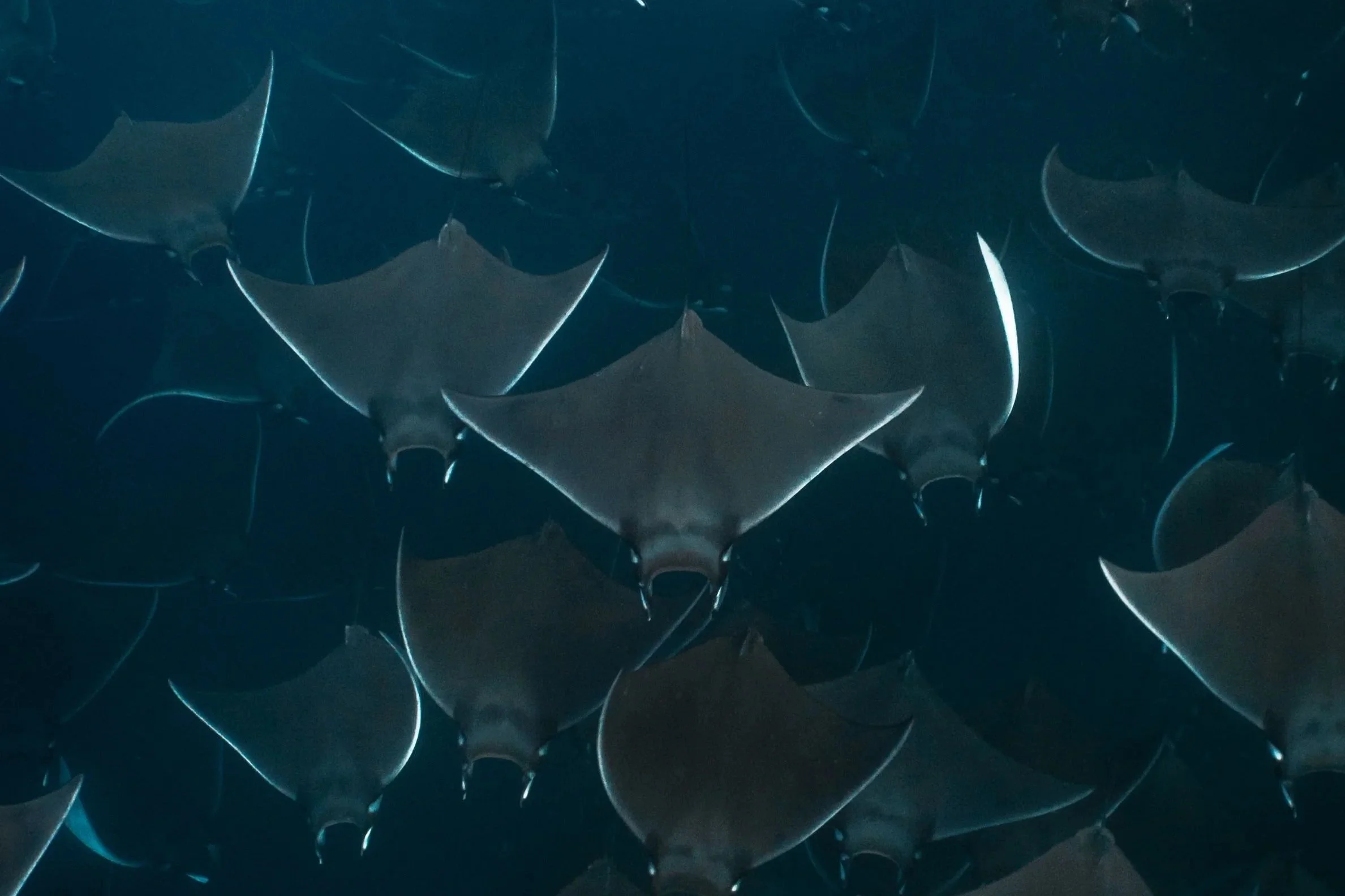
Freediving with a massive fever of mobula rays with Salty Souls during our hybrid day trips of line training and ocean exploration.
Best Conditions for Freediving
When we talk about the best conditions for freediving, we look at a few main factors: depth, visibility, and calm waters. You are more likely to encounter these conditions in the Sea of Cortez rather than on the Pacific side, which has larger swell from the open ocean and more waves. This is why the majority of freediving operations, including ourselves, choose the Sea of Cortez side.
Depth is not really an issue in Baja. We have depths that go hundreds of meters deep, which is more than sufficient even for world class athletes. In La Ventana specifically, the main factor that can limit depth is the season you choose to come. During windy days, we need to seek protection in shallower or more sheltered areas.
The best freediving conditions in Baja are from May to October. While we do not have a classic winter with snow, our winter season here in La Ventana is really “windy season,” when El Norte wind gusts can reach up to 20 knots. When we are freediving in La Ventana, we never dive in conditions stronger than about 14 to 16 knots. If you come freediving during wind season, expect some chop and the need for flexibility so you can take advantage of calm days or dive in wind protected areas.
Freediving With Wildlife
Baja has put itself on the map as a top freediving destination, especially because of how easy and accessible it is to freedive with wildlife. Despite what you might see on Instagram and other social media, it is very important that if you have a goal to freedive with animals, you do it well. Check out our blog post on best practices for freediving with wildlife.
When we talk about being in the water with wildlife, we always put the animals first and always follow the legal protocols for aquatic animal interactions.
Wildlife you can legally freedive with in Baja:
Dolphins (Risso’s, rough toothed, common, pantropical spotted), orcas under management plan guidelines, sharks, oceanic manta rays, mobula rays, pilot whales, mola mola or sunfish, striped marlin, sea lions, and sea turtles.
Wildlife that is illegal to freedive with in Baja:
Blue whales, humpback whales, fin whales, Bryde’s whales, grey whales, and sperm whales.
Bucket List Freediving Adventures in Baja
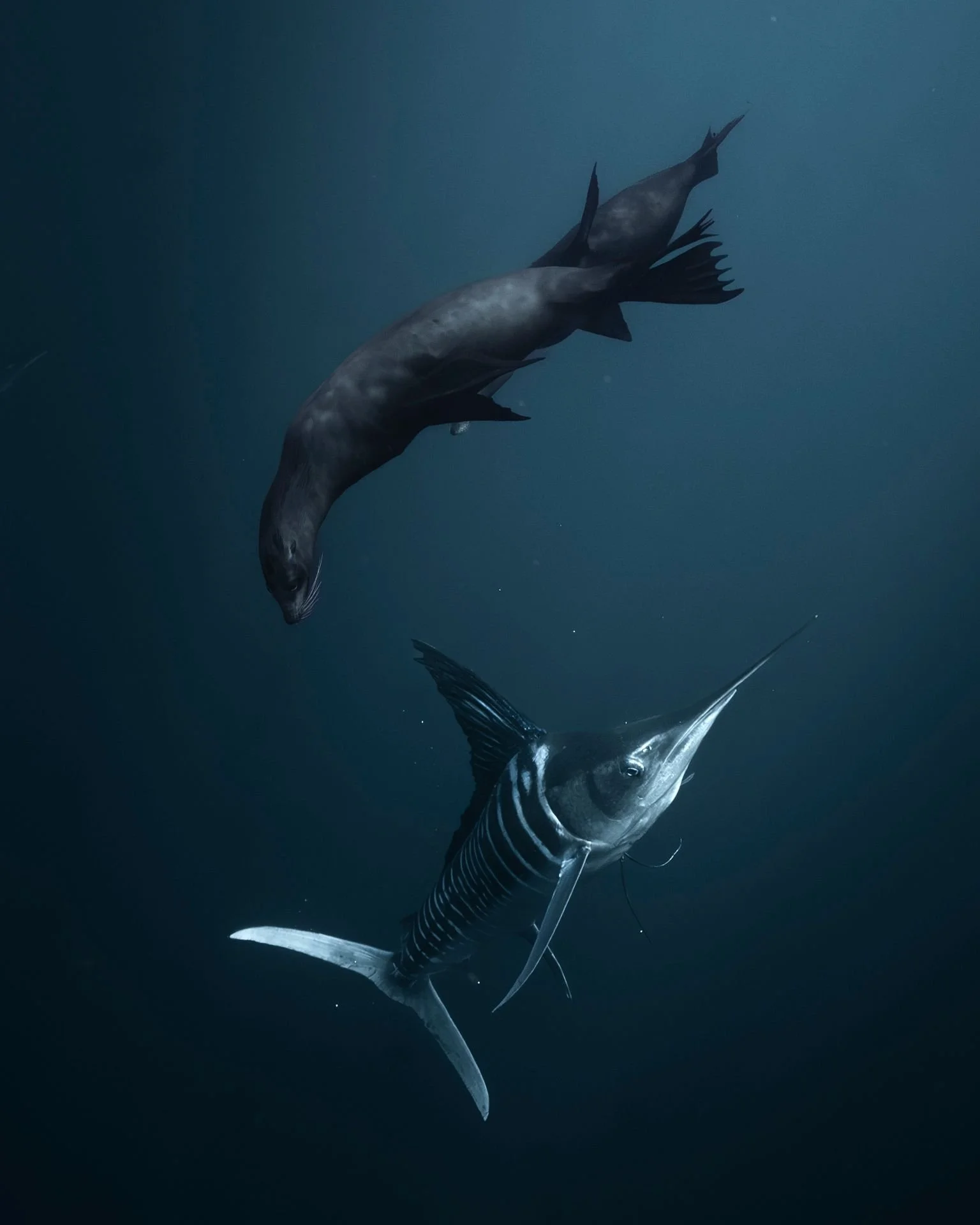
If you get the chance to come and freedive in Baja, try to experience some of these if you can:
Magdalena Bay in late October to November for the sardine run and marlin *featured in photo
La Ventana in May to June for the mobula migration
Cabo shark diving in December to February
Cabo Pulmo and bull sharks, mainly on scuba
If you are interested in any of these experiences, message us for more info on availability.