

Something that has always been a passion of mine and for many ocean people is capturing those moments. Behind the lens we become storytellers and documenters of a world that less than 0.5% of the population get to experience.
But as I have grown as an underwater content creator on my personal page (@emgonewild), and especially through guiding leading ocean adventures that I have seen true horrors of how care for the ocean is immediately compromised once someone holds a camera in their hands.
No, it is not all ocean photographers. But, there is a trend. A pattern and paradigm that becoming a photographer gives the right to become invasive.
“This is the best time in history to be a wildlife photographer... But it’s the worst time in history to be a wild animal.”
— Melissa Groo, Conservation Photographer and Associate Fellow with the International League of Conservation Photographers.
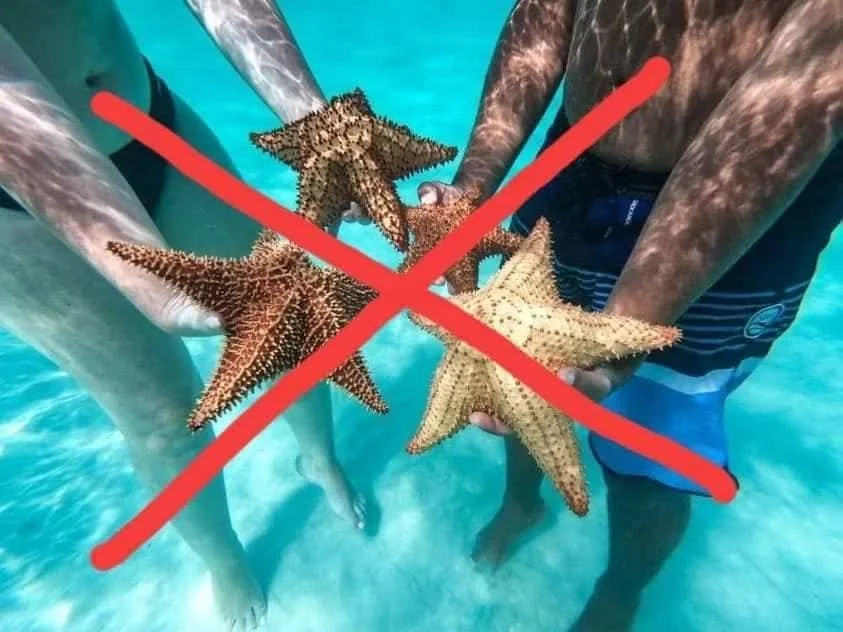
A post from a Zanzibar travel thread on avoiding tours and tourism that offer sea-star holding and photography packages.
In the ocean, some examples that we’ve seen of unethical underwater photography practices look like:
Harassment, chasing and crowding: Cornering marine line such as turtles or rays. This behavior causes stress and forces animals to flee.
Disrupting mating or aggregations: A major example we see is when this happens during the mobula migration in Baja when divers free dive into the middle of fevers (large groups) and dispurse them.
Reef trampling or crushing: stepping and grabbing onto the reef as if it is grass. Let’s not forget that corals are animals not plants.
Invading space or causing animals to believe they are threatened: There is a difference when interactions are forced and when they are welcomes.
TOUCHING WILDLIFE - Big no.
The reality is that good underwater photography is a skill.
It is a mastery of knowing environments, animal behavior, and our own body awareness so well that we are not intrusive, but a part of the ocean space.
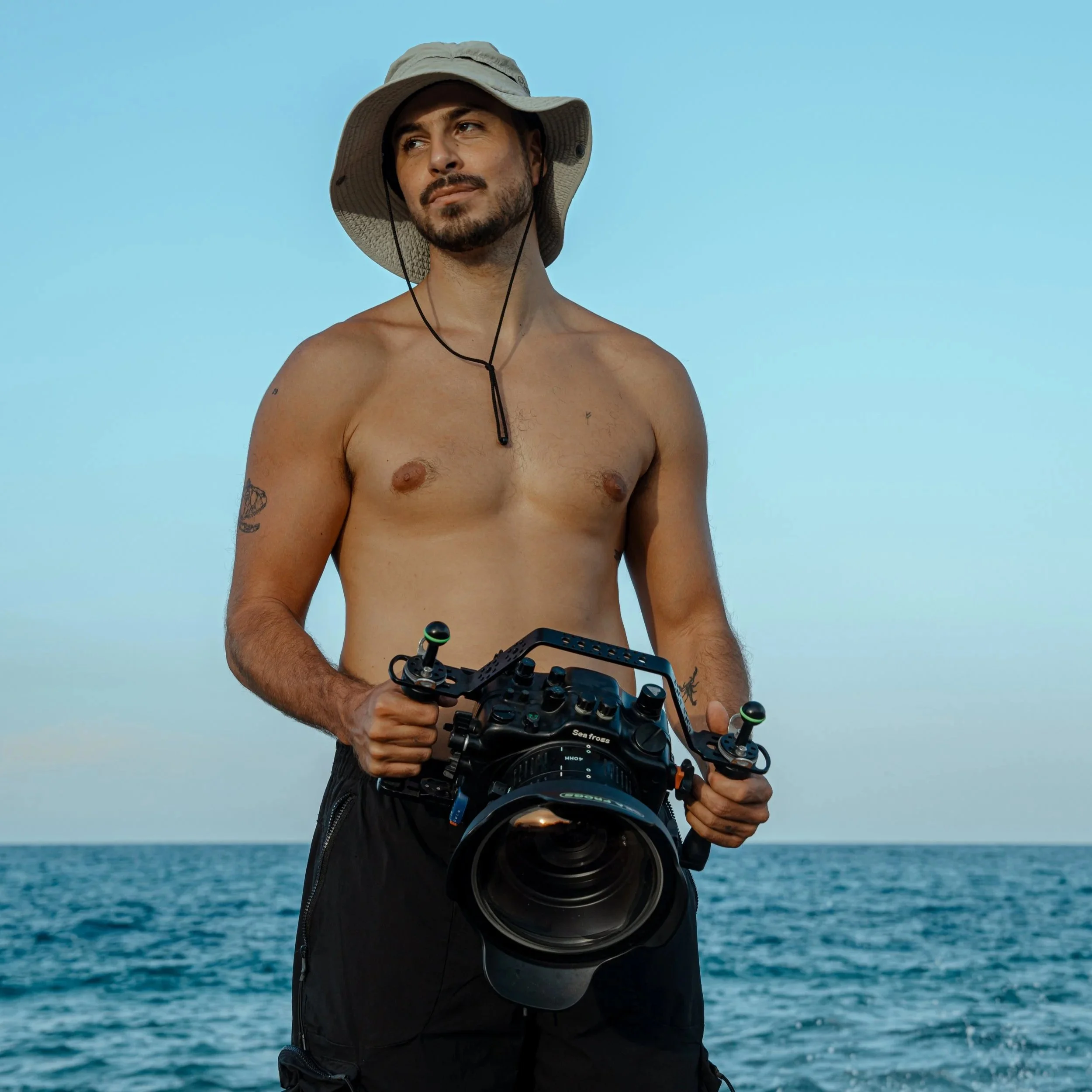
So we contacted Xabi Romero, a professional underwater photographer, ethical ocean advocate and founder of Nomad of the Blue to tell us his take.
How can we actually become ethical underwater photographers?
Here’s what he said:
Learn to read animal behavior. Understand when an animal is curious, comfortable, stressed or trying to get away. Your job is to adapt to the animal, not make the animal adapt to your shot. Sometimes reading behavior means watching, observing, and staying still and gentle enough to capture them in vulnerable states.
Question the image you’re trying to get. If getting closer, changing an animal’s behavior or asking a guide to intervene is what it takes to get the picture, ask yourself whether that picture is worth it. There is a point where you have to really sit with yourself and ask what is it you are choosing to value? Your shots? Or the ocean and it’s creature you claim to love so much (as you shove a giant dome in their face).
Take responsibility for what your images show. Don’t just think about what happened underwater, but also about the message your photograph sends. Avoid presenting harmful interactions as natural behavior or turning wildlife into a prop for a spectacular show. Remember, this is not an aquarium. This is nature.
If there is something we’ve taken from exploring this topic it is that one truth exists: Our oceans are vulnerable. Populations of species are declining. Ocean temperatures are rising. Coral reefs are struggling to keep up.
As ocean people and salty souls, it is our responsibility to prioritize the ocean’s wellbeing. And that means that the ocean has to matter more than the photograph. Even when that means coming home without it.
Ocean photography carries a doubled edged sword: the power to spark awe and wonder that inspires others to care. But, it also carries the weight of impacting the very thing we seek to protect.
The future of underwater photography depends on both a living ocean and photographers willing to protect it.